Thursday, June 14, 2012
Tuesday, May 22, 2012
Current Events: Deeper Digging Needed to Decode a Best Friend’s Genetic Roots
This article discusses the mysterious DNA of dogs. Scientists estimate that dogs started roaming Earth between 10,000 and 15,000 years ago. The only piece of information that we had for a very long time was that dogs came from wolves. When DNA was collected from 1,375 dogs, it was found that the breeds were so mixed that their deep genetic history was obscured. However, six dog breeds were found whose DNA was less mixed. They were the basenji, shar-pei, Saluki, Akita, Finnish spitz and Eurasier. When they added these to eight breeds deemed ancient in other studies, what they found was that the dogs that were most genetically distinct were not from the places where the oldest archaeological and fossil evidence had been found. Scientists expected that if these breeds were closer genetically to the first domesticated dogs, then they would also be geographically closer. They would also be closer geographically to early dog fossils and areas where ancients breeds are known to have lived. Oddly, the findings proved to oppose this expectation. The most genetically distinct dogs were recently relatively isolated in the history of domestication.
Luckily, not all is lost. For thousands of years, humans
have buried their dogs. These early dog fossils can be discovered and dug up.
Furthermore, just as DNA had been taken from Neanderthals to study early human
life, the same can be done with dogs. The genetic findings from ancient dog
fossils should help shed light on the mysteries of early dog domestication
in the next few years. As more DNA is collected and more knowledge of dogs is
received, we are taking steps in the right direction. In the meantime,
scientists need to just step back and take a breath. We can only come closer to
figuring out where and when dogs appeared on Earth.
Link:Dogs' Genetic Roots Remain Obscure
Monday, May 14, 2012
Heat Transfer Lab Report
Purpose:
The purpose
of the lab was to further understand the transfer of heat through the
observation of sand and water.
Hypothesis:
I predict
that the water will heat faster than the sand. I also predict that the water
will cool down quicker.
Materials:
·
2
thermometers
·
2
beakers, 400 mL
·
Water,
300 mL
·
Metric
ruler
·
String
·
Ring
stand and two ring clamps
·
Sand,
300 mL
·
Lamp
with 150-W bulb
·
Clock
or stopwatch
·
Graph
paper
Procedure:
1. Fill one beaker with 300 mL of dry
sand
2. Fill the second beaker with 300 mL of
water at room temperature
3. Arrange the beakers side by side
beneath the ring stand
4. Place one thermometer in each beaker
5. Suspend the thermometers from the
ring stand with string
6. Position the lamp so that it is about
20 cm above the sand and water. There should be no more than 8 cm between the
beakers.
7. Record the temperature of the sand
and water in the data table
8. Turn on the lamp. Read the
temperature of the sand and water every minute for 15 minutes. Record the
temperatures in the Light On column in the data table.
9. Turn the light off. Read the
temperature of the sand and water every minute for another 15 minute. Record
the temperatures in the Light Off column.
Results:
·
The
water heated up within the first 8 minutes.
·
The
temperature of the sand did not appear to rise.
·
Once
the lamp had been shut off, the temperature of the water rose at the 20 minute
mark.
·
Once
again, the temperature of the sand did not change.
Conclusion:
Conclusion:
The purpose
of this lab was to observe the transfer of heat by comparing the heating and
cooling of sand and water. My hypothesis was that the water would heat and cool
faster than the sand. The results showed that the water heated and cooled while
the sand’s temperature remained the same. Although the results supported the
hypothesis, the information gathered stated otherwise. Sand is supposed to heat
up faster than water. This is because in general the land surface, being less reflective and more
absorbent, will absorb a great deal of solar radiation, and will
have a significant increase in temperature on a bright sunny day. The ocean, at
the same time, will reflect a greater portion of the radiation, causing it to
take longer to absorb the heat. The results most likely ended up like this
because a lamp was used instead of radiation from the sun. The data collected
showed that the temperature of the sand remained at 25°C and the temperature of
the water rose from 23°C to 24°C. The temperature then decreased back to 23°C. This
lab helped me understand why the sand at the beach is normally hot while the
water is typically cold. . Knowledge like this is good to have when you are at
the beach so you can somewhat predict how cold or warm the water will be based
on how warm the sand is.
Wednesday, May 9, 2012
Volcano Behind Atlantis Legend Re-awakens (Current Events)
Thousands of years ago, cataclysmic eruptions at the Greek isle of Santorini caused the formation of a volcanic crater. The volcanic crater in Santorini has endured smaller eruptions as recent as in 1950. However, in 2011, the volcano awoke and is currently active. The article discusses how investigators installed a GPS monitoring system in 2006 to track the movement of the crater and volcano. After tracking it for a number of years, researchers found that the land near the volcano had been swelling at an accelerating rate reaching a growth about 7 inches per year. This was discovered between September 2011 and January 2012. The purpose of this ongoing monitoring is so they can use the information to evaluate the physical features and issues that cause the unrest and possible eruption of the volcano.
I believe that this monitoring system could assist in discovering new information about the inner workings and other mysterious aspects of a volcano. Scientists can potentially find fascinating information unknown to the world. However, there are some things hindering researchers from discovering some of the most scientifically interesting results possible. The greatest obstacle they are facing is the water itself. Most of the deforming land at Santorini is underwater. Not much investigating can occur without the proper seafloor equipment. Soon enough, they will find a way to fix the problem and continue their fascinating research.
Thursday, March 29, 2012
Current Events 3/29/12
The article I read was about a movie director named James Cameron. He completed the first human dive in 52 years to the ocean’s deepest spot. He navigated his mini-submarine down in the western Pacific in an underwater area known as Challenger Deep. He began this dive on Sunday, March 25th at 3:15 p.m. Eastern Daylight time. Then, he landed on the bottom at 5:52 p.m. and surfaced at 10 p.m. His team planned to bait the area with food that might have become a magnet for larger creatures luring in the dark.
I believe the article was intriguing and shocking and the explanation was monumental. This was the first human dive in 52 years to the ocean’s deepest spot. Also, he took on the incredible danger of embarking on this journey alone. Another impressive thing was that the mini-submarine was his own design. This monumental expedition led James Cameron to embarking into an “alien world”.
Monday, March 5, 2012
Wednesday, February 8, 2012
Lab Report: States of Matter
For the past week, in science class, we did several labs involving matter. We observed the states of matter and other aspects of matter. The main purpose of the labs was to understand the distance between chemical changes and physical changes. Through the duration of the week, other knowledge was also compiled.
The first two labs were in the same context because both involved candles. The first was quite basic. Notes were taken on the physical properties of a candle. However, no chemical properties were noted because one cannot observe matter’s chemical composure unless it is manipulated. Once the candle was lit, observations on chemical and physical properties were recorded. Physical changes were first written down. These would include that it was melting, smooth, and shiny. Now that it was lit, chemical changes included things such as the fact that it was burning. The evidence of this was shown in the flame and smoke. In addition, this lab was a source of knowledge involving combustion. Combustion is the act or process of burning. Thus combustion occurred when the candle was lit. People see combustion on a daily basis without even acknowledging it. When someone lights a candle in their kitchen or lights a birthday candle, one could say that they are performing a science experiment. This could be useful when forming hypotheses regarding combustion and burning.
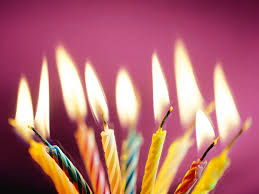
The second part of this lab involved candle but had a different purpose and procedure. A candle was set aflame first and then a mixture of vinegar and baking soda was created. This formed a gas known as carbon dioxide. This gas was poured over the candle and caused it to blow out. The carbon dioxide surrounded the air around the flame, which needs oxygen to survive, and removed the oxygen, putting out the flame. A physical change occurred when the candle was lit and it was put to a stop when the fire went out. Insight into the life and death of flames was provided and can be used on a regular basis. The air we blow out of our mouths is carbon. So, every time we blow out a candle with our mouths we are performing this experience in a different way. An understanding of the science behind blowing out candles was developed.
In the following lab, physical and chemical changes of a marshmallow were performed and identified. After notes were initially taken on the description of the marshmallow, it was ripped in half. This was a physical change because it only affected its form, not its composition. Next, a bite was taken from the marshmallow. This was done to have an initial taste. After another marshmallow was placed on a skewer, it was held over a Bunsen burner until it was burnt. The blackened part of the marshmallow was tasted. The taste of the marshmallow changed drastically. For one, instead of being sweet, chewy, and powder-like, it was smoky, creamy, and crispy. Both physical and chemical changes had taken place. A chemical change happened when the marshmallow was burnt and when the inside melted a physical change occurred. After completing the procedure, it is now clear to me that whenever we roast marshmallows, we are executing a scientific procedure involving physical and chemical changes.
The final lab involved sugar cubes. Two sugar cubes were first taken and crushed into a powder with a mortar and pestle. The sugar had been grinded and it underwent a physical change. It was then poured into a glass of water and stirred. The sugar was no longer visible and had dissolved, going through a physical change. However, the sugar was still present because the water tasted sweet. Next, two different sugar cubes were put in a test tube and were held over the Bunsen burner. Observing the contents of the test tube, it was noticed that the sugar was burning and turning black. Smoke started coming out of the tube and black crystals were formed inside the test tube. Once the test tube was taken off the flame, many other changes were noticed. The sugar was now burnt, black, and crystallized. In fact, it wasn’t sugar anymore. Once sugar underwent the chemical change of being burnt, a new substance was formed inside the test tube. This lab conveyed the significance of chemical change in such a simple substance as sugar.
Clearly, physical and chemical changes of matter can be observed in numerous ways. The above labs utilized burning and flames to entice the students to want to learn about matter, chemical changes, physical changes, and other related topics. To conclude, forming an understanding of substances and chemical changes can not only help in an experiment in a laboratory but can also add to people’s knowledge of reactions that happen throughout their lives on a daily basis.
Friday, January 6, 2012
Separating Mixtures (Procedure)
- Use the spoon to remove the kidney beans from the mixture.
- Next, remove the toothpicks with the spoon.
- Then, use the spoon to remove the bug.
- Put the magnet in the mixture and remove the iron filings.
- Fold the filter into a cone and put it in the funnel. Put this over the beaker and pour in the mixture. The sand is now in the funnel.
- Put the beaker with the leftover contents of the mixture on the hot plate.
- Once the water evaporates, the salt is visible.
- Remove the beaker from the hot plate and turn it off. Clean up the rest of the materials.
Wednesday, December 21, 2011
Frog Dissection Lab
In the frog dissection lab, we cut open a preserved frog and examined organs inside it. It may have been a little gross, but it was very fascinating! Even though a frog may not seem like it is anything like a human, our organs are very similar. The main differences, in my opinion, are their location and their appearance. But that may just be because of proportions.However, this is not what we noticed right away. Our first direction was to identify whether it was a male or a female. We opened it and saw no eggs. It was concluded that the frog was a male after the testes were located. Then, we saw these small noodle-shaped structures attached to the body. These were the fat bodies. Because there were so many of these, it took awhile to take them out. Sadly, we accidently ripped out the testes when we wer dissecting. Even though these organs were small and hard to find, there were some organs that you can't miss by sight. The biggest was the liver. It was made up of three big lobes and seemed to take up alot of the space inside of a frog. It also hinders the examination of the other organs. After taking out the liver, you could see so many more organs. One organ that stuck out to me was the gallbladder. It looks like a small green bubble. It is located directly under the liver. Also, I was humored by the appearance of the heart. It actually somewhat looked like a cartoon heart! But it was a little more triangle-shaped than a cartoon heart. Also, the small instestine looked really cool when you removed it and stretched it out. It was so long! All of these organs are in our bodies also. So, when you look inside a frog, it isn't too hard to locate all of the organs. It was so amazing to be able to touch and examine each organ and remove it from the frog. Oddly, it was gross at the same time! We saw organs like the spleen, kidney, lungs, and pancreas. I would definitely do it again. But if I did do it again, I would hope that it doesn't smell as bad as the first time! For more information on frogs, you can go to these websites:
Here is an online dissection game:
http://www.surgery-games.org/43/Dissect-a-Frog.html
Note: This game is online dissection in which you then have to identify the individual parts.
For further knowledge about frogs, visit this website:
http://www.e-tutor.com/et3/lessons/view/52133/print
Diagram of the internal structure of a frog:
Saturday, October 22, 2011
Chicken Wing Dissection
Recently, my science class dissected a chicken wing to study the different types of tissue in organisms. Though we may seem like completely different species, we all have the same basic tissues in our arms. For example, we both have biceps and triceps, the muscles that control the movement of the arm, or wing. Also, we both have skin, tendons, ligaments, and nerves. In addition, when all of these tissues had been removed, you can see that both the chicken and and the human have an ulna, radius, and humerus. These are the bones of the arm. I know some people might have thought this was disgusting, but it is the food we consume in our bodies and I found the dissection quite helpful in learning about our bodies. This is because our build and a chicken's build are quite similar to each other.
Sunday, October 16, 2011
Diffusion Lab Report
The diffusion lab created an understanding of the processes inside a cell using iodine, cornstarch and water. The purpose of the lab was to observe the diffusion of a substance across a semi permeable membrane. To do this, iodine was used as the indicator and a plastic baggie was used as the permeable membrane that separated it from the substance it indicated which in this case was starch. Since iodine is an indicator for starch, the predicted outcome was that when osmosis, a specified form of diffusion with water, occurred and the iodine moved across the membrane, it would change color in the presence of starch. Initially, the iodine was hypertonic since it was highly concentrated in the beaker. As it moves across the permeable membrane, it would be diluted to a lower concentration by the water and became hypotonic. It was predicted that the iodine would diffuse across the permeable membrane so that the concentration of iodine in both the baggie and the beaker would be the same and thus isotonic.
After 15 minutes of observation, the solution in the baggie changed from white to a shade of purple while the solution in the beaker remained orange. This leads to the conclusion that the iodine diffused through the baggie and underwent the process of osmosis, as predicted, to indicate the starch by changing its color. Since the contents of the beaker remained unchanged, it was apparent that the semi permeable membrane did not allow the starch to transfer from the baggie to the beaker thus the baggie was selectively permeable. The occurrences in this lab mimic the behavior of the cell membrane. The cell membrane is what protects the cell and selectively controls the movement of molecules into and out of the cell. Thus, it is selectively permeable just as the baggie was selective with the iodine and the starch. This is how cell membranes react with water and food molecules. Certain molecules can pass through the cell membrane to benefit the cell whereas harmful molecules are blocked from entering the cell. This process is required for the cell to function.
Looking outside of this experiment, diffusion is utilized on a daily basis by most people. For example, when a tea bag is placed in boiling water, the molecules of the tea leaves diffuse through the tea bag to color and flavor the water. Another situation where molecules are diffused by osmosis is sugar and coffee. When sugar is dissolved in coffee, the sugar molecules spread throughout the coffee and sweeten its taste. Not all diffusion is beneficial. In the case of cigarette smoke, it diffuses into the air and causes second hand smoke inhalation. Also, car and truck emissions of carbon monoxide can be deadly when diffused in high concentrations. That is why the automobile engines cannot be started inside a closed area such as a garage. These examples show how diffusion has both a positive and negative effect on the human population.
Tuesday, October 11, 2011
Diffusion Lab: Response
Today, in science class, we did a diffusion lab experiment with iodine and starch. What we did was put about a teaspoon of cornstarch into a baggie and added 100 mL of water. We then filled a beaker halfway with water and our teacher added some iodine into it. After placing the baggie into the bveaker and letting it sit for about fifteen minutes, we observed what we saw. And of course, what we saw supported what we learned about diffusion, the movement of molecules from a higher concentrate to a lower concentrate. We also related it to what we know about cells and how a cell membrane could be selectively permeable, or able to choose what goes into and out of the cell. Also, we learned that iodine as in indicator of cornstarch. An indicator is a substance that changes the color of another solution when coming in contact with each other. In this lab, the indicator was the iodine and it seeped through the bag and turned the cornstarch a hue of purple. This lab experiment was one that was just a remarkable sight in seeing the colors change. Also, connecting cells that we have studied to our studies in the lab really helped me understand all of these processes and definitions that sound so confusing. Hopefully, we will do many more labs this year!
Friday, June 17, 2011
Class Response
In science class, we have been working with cars. these cars are gravity powered vehicles that we built our selves. Even though building a car can be hard, it's worth it in the end. The funniest part of working with these vehicles was when everybody brought their cars in and presented them. That's because of course, every person is unique so every car is unique. Some cars were small, and some were big. There were a few that looked like ordinary cars, and others were abstract. When I say abstract, I mean that they looked absolutely nothing like real cars. except for the fact that they had wheel. You could find cars made out of water bottles, soda cans, and shoe boxes. There were also very odd wheels. A lot of people made them out of C.Ds and other people made them out of cardboard and paper. Other people found old plastic wheels or little junk items they found around their houses to construct wheels. After all the cars were turned in, we started running them down the ramps that were built. I enjoyed watching them go down. Some of them didn't even get down the ramp! Other cars went to the very end of the classroom. My car got off the ramp, but it didn't go very far. But still, it was fun to laugh at my own creation! Oh, I forgot to mention why we were even using cars in the first place! Well, we were learning about motion, forces, and many other things in our physics unit, and we used cars to help us learn about them. I never realized how interesting physics can be until now!
Monday, May 16, 2011
Science Blog 5/17: Are coffee drinkers less prone to aggressive breast cancer?
Tuesday, February 1, 2011
Blog 4: Growing Artificial Meat in Labs to End Hunger
http://www.foxnews.com/scitech/2011/01/31/growing-meat-labs-end-hunger/
Recently, scientists have developed the idea that "cultured"(artificial) meat will end our world's hunger and also be much less expensive. In other words, they have been creating genetically engineered meat that apparently can be designed to your liking. Scientists say that they "envision football field-sized buildings filled with large bioreactors, or bioreactors the size of a coffee machine in grocery stores, to manufacture what they call "charlem" -- "Charleston engineered meat.". In my opinion, the idea of growing meat in a lab is unethical. I mean, its obviously unnatural, especially because you don't know how it is grown. It might have chemicals, or other toxins and ingredient that just aren't healthy. Also, isn't meat supposed to contain proteins that our bodies need to survive? I understand that it could possibly solve some of our world's large economic crises. But is it really worth all the risks? Some people may not agree, though I'm sure the idea of genetically engineered meat is both unethical and at too high of a risk. I mean, think about this, who would want to eat artificial meat?
Monday, January 24, 2011
Blog 3: Class Response
I found today's science class very intriguing, although very confusing. Someone came in and informed us on his work in Egypt's Valley of the Kings and how to date fossils and rocks. The Stratigraphic Laws are the ways you use to give rocks a relative age. These include horizontality, superposition, intrusions or faults, and inclusions. Each one of these is a different law you can use to date rock. You can also do this with layers of rocks, just like the examples we did in class. In addition to giving rocks a relative age, you can also give a fossil a relative age based on what layer of the rock it is found in. We use all of this today to determine what Earth was like millions of years ago. I found all the things we did in class quite fascinating. Paleontology and geology are very unique fields to work in.
Tuesday, October 12, 2010
Blog 2: Mutualism
This is an example of mutualism. It is a picture of a vine on a tree. This tree is providing a home for the vine. The vine is also poisonous. And no living thing could go near or else they would be harmed. So by living on the tree, this vine vine is protecting the tree from harm by predators and nearby limiting factors. Which is why this is an example of mutualism. Because both organisms are benefited.
Thursday, September 30, 2010
Biotic Limiting Factor
This tree is a limiting factor because it blocks sunlight from the plants that live under it. It does this because plants need sunlight but if a tree is blocking it the plant will die because it doesn't have the energy it needs to produce food in the process of photosynthesis. It also takes up space around the the trunk that could be used for other plants to live.
Subscribe to:
Posts (Atom)